
|
Getting your Trinity Audio player ready...
|
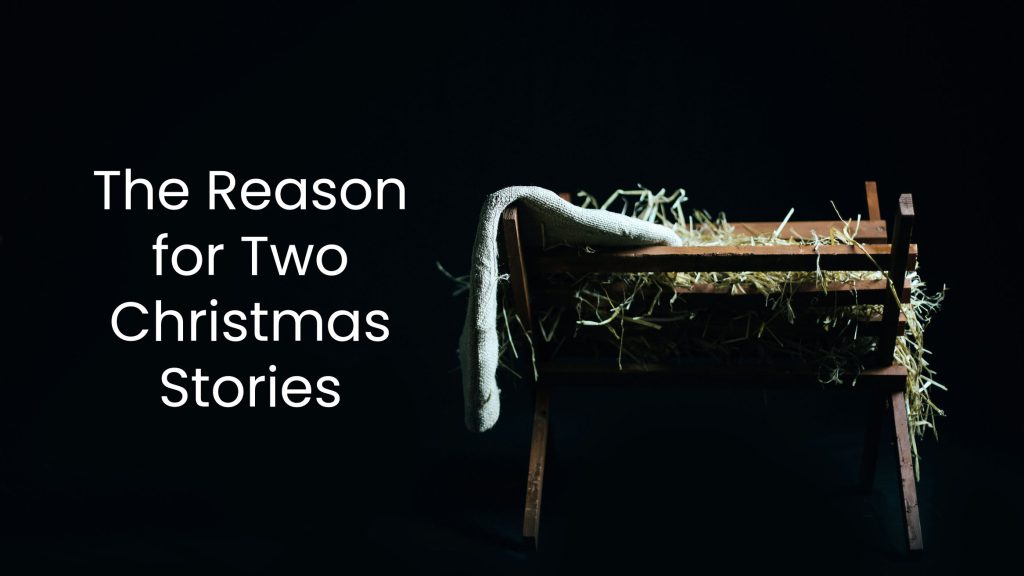
She gave birth to her firstborn son and wrapped him in swaddling cloths and laid him in a manger, because there was no place for them in the inn (Luke 2:7, ESV).
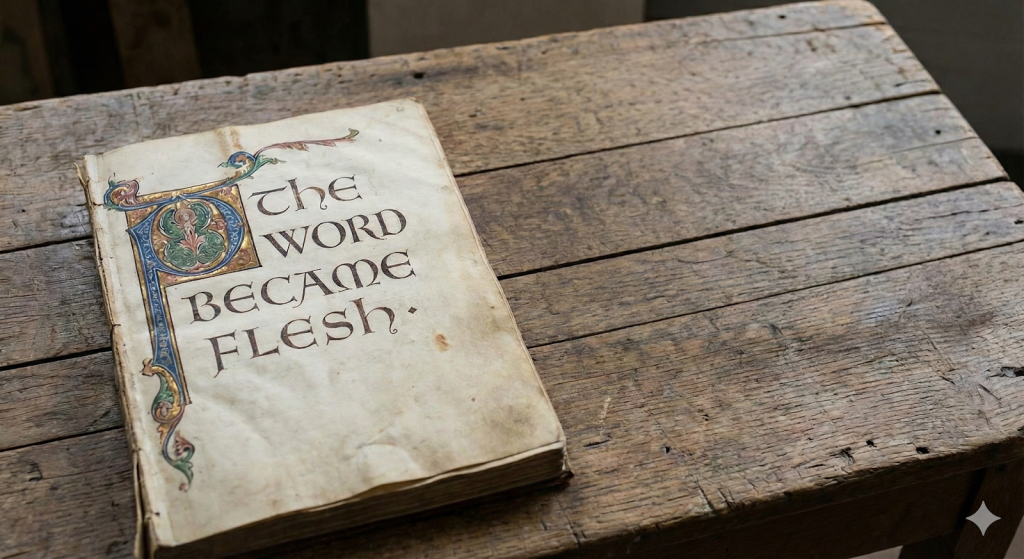
And the Word became flesh and dwelt among us, and we have seen his glory, glory as of the only Son from the Father, full of grace and truth (John 1:14).
There are two Christmas stories in the Gospels — one written in Luke and the other in John.
Luke, the historian and doctor, focused on a baby, swaddling clothes, shepherds in a field, angels singing, and the lack of room in the inn. Luke described what people saw that first Christmas morning, while John wrote what heaven saw. In the Gospel of Luke, we get a baby in a manger, while in the Gospel of John, we read about the Word becoming flesh.
Years ago, I stood in a field at night, outside Bethlehem. It was quiet, and there were lots of stars. I wished that I could have witnessed the calm interrupted by angels singing about the glory of God.
Yes, I — and you, though you may not have been to Bethlehem — can imagine an interrupted Christmas night. We are humans, we live on earth, we get it. But how about those in heaven?
My imagination (hopefully not irreverent) has wondered what the saints in heaven thought on Christmas morning when they woke up to the news. As one eternal saint might say, “Hey, I just got back from the throne room, and one of the chairs is empty. God the Father is there, with the Spirit sitting right next to Him, but where’s Jesus? His chair is empty.”
Then another saint says, “You should have stayed up last night, because Jesus is on earth, and was born yesterday as a baby in a manger. It was quite the event that you missed. The heavenly host choir even went down to earth to make the announcement in Bethlehem.”
What a sense of incredulity would sweep through the eternal realm. Forgive my inaccurate depictions of heaven, but recognize my point that humans saw a baby in the manger, while those in heaven witnessed the Word becoming flesh.
When the Apostle John wrote the Gospel of John (probably in the 90s A.D.), Jerusalem and probably Bethlehem had been destroyed by the Romans in 70 A.D. Luke had already given the earthly details of the birth in Judea, but at that time, John writing to Greeks, Romans, and everyone else in the Roman empire, wanted to express a bigger perspective of the incarnation.
In the beginning was the Word, and the Word was with God, and the Word was God. He was in the beginning with God. All things were made through him, and without him was not anything made that was made. In him was life, and the life was the light of men (John 1:1-4).
So, John chose the word “Word” or “Logos” in the Greek — a word that better expressed what heaven saw but also gave the philosophical breadth that the Gentiles needed (having little knowledge of Old Testament Scripture) to grasp the nature of Jesus. The citizens of the Roman Empire, in their palaces and villas, steeped in Greek philosophy, might overlook a manger, but the Creator of the universe humbly coming in the flesh as the Light and Life of the world would get their attention.
Amazing! Thank you, John. Now we just need to believe.
Amen!