
|
Getting your Trinity Audio player ready...
|
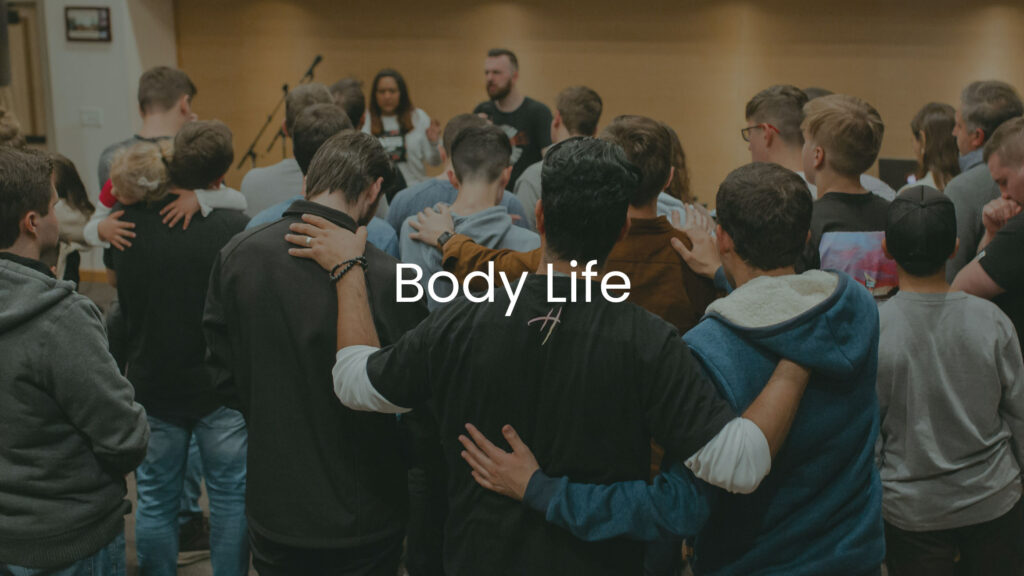
In 1972, Ray Stedman published the bestselling book Body Life. It quickly became required reading for just about every believer. In this book, Stedman became one of the first mainline denominational leaders declaring that all Christians had spiritual gifts.
The book emphasized gifts used for unifying the body of Christ.
And he gave the apostles, the prophets, the evangelists, the shepherds and teachers, to equip the saints for the work of ministry, for building up the body of Christ, until we all attain to the unity of the faith and of the knowledge of the Son of God, to mature manhood, to the measure of the stature of the fullness of Christ (Ephesians 4:11-13, ESV).
In the 1970s, the church in America was politically torn apart with pro- and anti-Vietnam War factions and Christian denominations arguing over their differing doctrines. Out of this turmoil arose a revival in which 10 to 12 million youth spontaneously became Christians, with no desire for doctrinal squabbles or a culture that emphasized institutions over individuals.
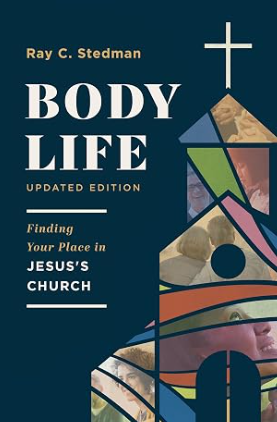
Into this “we need freedom” movement of Jesus Freaks, Ray Stedman wrote a book about unity derived from living together in the power of the Spirit.
Resurrection power is available to every true Christian by faith. What is faith? It could well be defined as a human response to a divine promise. Faith is a sense of expectation, a quiet trust that God will do exactly as He said He would. (Stedman)
What is terribly missing in all too many churches is the experience of “body life”—that warm fellowship of Christian with Christian that the New Testament calls koinonia, which was an essential part of early Christianity. (Stedman)
My first ministry, called the One Way House, had single men living together to take the gospel by proclamation and example to a lost world. When my wife and I were married, we lived in community properties for seven years before owning a house of our own.
Unity or working together — we called it community.
Stedman’s book Body Life had this radical thought: the work of the church should be done by individual Christians, not professional clergy, and we should work together — that Christian body life or unity would not be possible without a clearly defined goal of saving the lost.
Throughout the centuries of church history, no principle has proved more revolutionary—or more bitterly fought—than the declaration of Ephesians 4 that the ultimate work of the church in the world is to be done by the “saints”. (Stedman)
The early church relied on a twofold witness as the means of reaching and impressing a cynical and unbelieving world: kerygma (proclamation) and koinonia (fellowship). It was the combination of these two that made the church’s witness so powerful and effective. Unbelievers could easily shrug off the proclamation as simply another teaching among many, but they found it much more difficult to reject the evidence of Christian fellowship. (Stedman)
It’s been over 50 years since Stedman’s book, and the idea of Christians living in power and unity, along with the perhaps naïve beliefs about community of the Jesus People in the 70s, have been lost. Most Christian e-communication and print books today proclaim “how we can be better” through discipleship without cost and “spiritual formation” — resulting in a fractured church without the power of the Spirit and koinonia.
I miss those early days of my Christian faith.