
|
Getting your Trinity Audio player ready...
|
I praise you, for I am fearfully and wonderfully made. Wonderful are your works; my soul knows it very well (Psalm 139:14, ESV, emphasis added).
I find myself reading obscure topics like how DNA works, and when I find something interesting, I try to understand it and then explain it to all of you. This is hard work, and I think you should be thankful and impressed!
Recently, I read this quote…
It is highly relevant to the origin of life that the genetic code is constructed to confront and solve the problems of communication and recording by the same principles found both in the genetic information system and in modern computer and communication codes.
HHHHMMMHHM, my DNA is like a hard drive. I wonder which one is better? So, I did some research and found that…
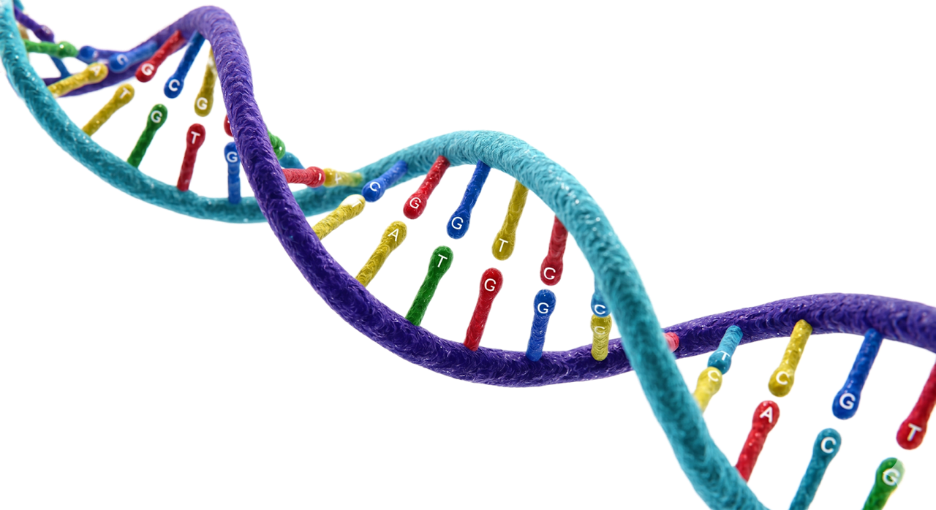
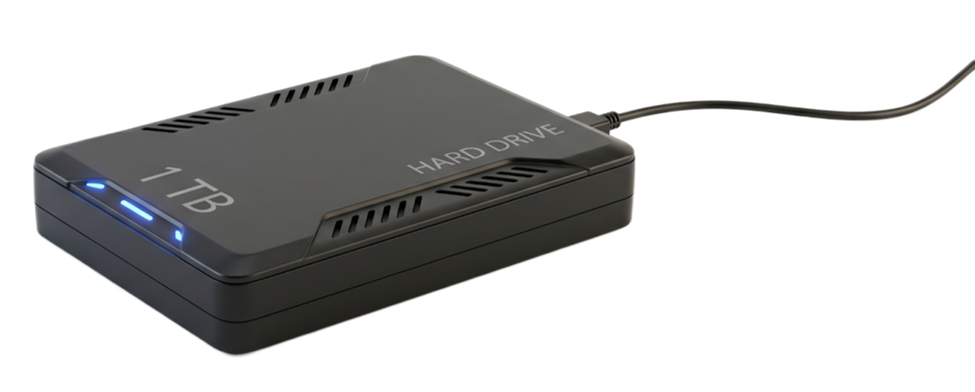
- A single gram of DNA can store 215 petabytes of information. I recently purchased a computer that has a 1-terabyte hard drive. Which, in layman’s terms, means one gram of DNA is equivalent to 215,000 1-terabyte hard drives. I didn’t think my 1-terabyte hard drive had enough storage, so I purchased a 2-terabyte hard drive instead for an additional $700. So let’s multiply $7o0 times 215,000, which equals $150,500,000.
- The human body contains about 20 grams of DNA that contains coiled proteins that, if unstretched, would reach about 38 billion miles.
- If all the books ever written were stored using DNA, they would all fit in a tablespoon from your kitchen.
As one scientist insists, “We are nowhere close to inventing such efficient data storage devices today, as the density of information in DNA is 40,000 billion times greater than the best hard drive.”
Today, there’s a lot of discussion about modern data centers. The largest, used by companies like Google®, Amazon®, and Microsoft®, holds 1,000,000 terabytes of data. These data centers can consume about 100 Megawatts of power (enough for 100,000 houses), and to cool all the terabyte hard drives, they consume between 1 million and 5 million gallons of water a day.
The human body, with the DNA equivalent to 215,000 1-terabyte hard drives (25 percent of Amazon’s, Google’s, or Microsoft’s data centers), consumes about 100 to 120 watts of power each day, or the equivalent energy that our body gets from eating one apple.
Yes, this does give new meaning to the phrase, “Eat an apple a day to keep the doctor away.”
And our bodies use about 1 gallon of water, meaning that the daily water needed for the 2.3 million population of southwest Ohio (including Cincinnati, Hamilton, Springfield, Dayton, etc) is only half of a large data center.
Please, drink your eight glasses of filtered water every day.
If you are an atheist, after reading the above statements, you should go directly to your agnostic psychologist and commiserate together.
Another scientist (a Nobel laureate) wrote, “The likelihood that DNA arose from ‘pure chance’ is one of those improbabilities so incommensurably high that they can only be called miracles, phenomena that fall outside the scope of scientific inquiry.”
When we examine human DNA vs. a Hard Drive, it doesn’t take a lot of faith to believe that we are fearfully and wonderfully made.