
|
Getting your Trinity Audio player ready...
|
Gracious words are like a honeycomb, sweetness to the soul and health to the body (Proverbs 16:24, ESV).
In recent years, researchers have studied men’s and women’s communication styles to document perceived differences. The primary purpose of these intensive investigations is to better understand and communicate with one another.
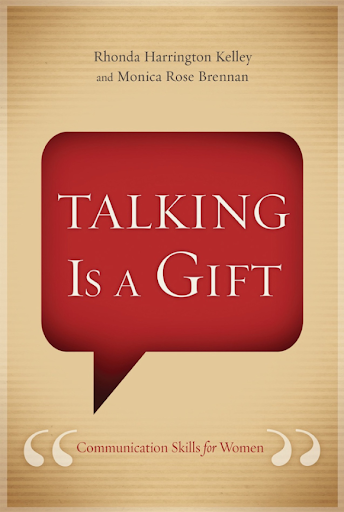
Most of that opening paragraph is taken from the book Talking Is a Gift by Rhonda Kelley and Monica Breman. The book was written several years ago, but it has become one of my favorite resources for improving personal communication and public speaking.
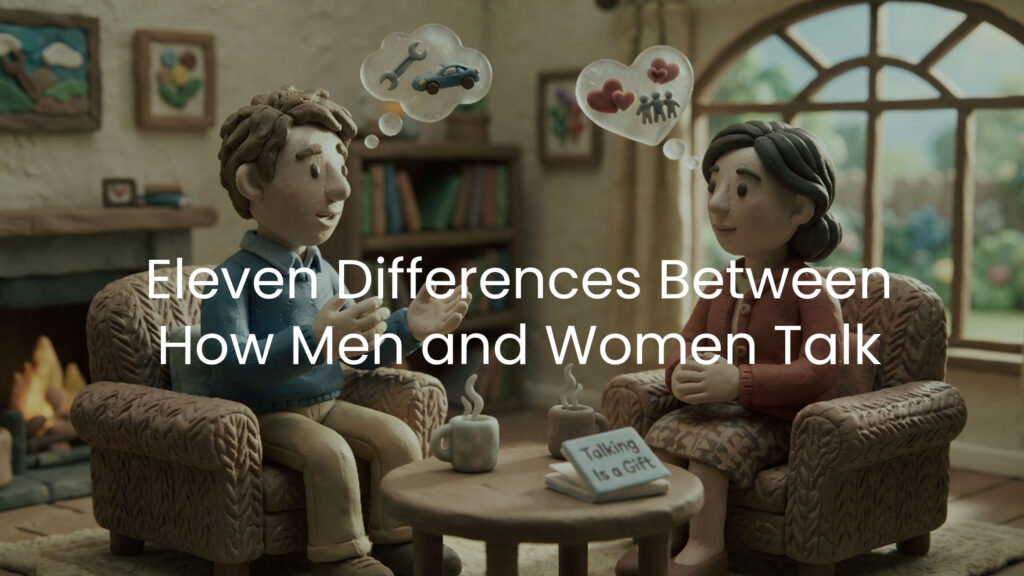
The first chapter lists the Eleven Differences Between How Men and Women Talk. Conversations are the lifeblood of healthy relationships, and anyone in a relationship with the opposite sex will quickly notice that men and women perceive things differently.
When I first married Barbara, I often thought something was wrong with me whenever we talked. Of course, being unable to find anything wrong with myself, I began to suspect something was wrong with her! Fearing I’d lose marital bliss, I kept quiet about it. Honestly, after almost 50 years of marriage, I still hit occasional roadblocks, but I have found this list immensely helpful in understanding our differences and—prayerfully and hopefully—keeping our conversations improving.
- Men use communication to maintain status; women to maintain intimacy.
- Men offer solutions to problems; women complain about problems.
- Men give information; women give affirmation.
- Men report-talk; women rapport-talk.
- Men lecture; women listen.
- Men use conflict to negotiate status; women avoid conflict to establish connection.
- Men interrupt; women overlap.
- Men talk more in public; women talk more in private.
- Men use silence; women avoid silence.
- Men speak with confidence; women apologize.
- Men use body language indirectly; women use body language very directly.
The book continues with scientific observations about communication differences in three key areas: content, style, and structure.
- Content refers to what men and women talk about. Men often talk about sports, money, and business, while women most often discuss people, feelings, and relationships.
- Style refers to why men and women talk. Men often express themselves to provide specific information, compete, and solve problems. Women most often express themselves to build understanding, offer support, and connect.
- Structure refers to how men and women talk. Men typically use precise words that are straight to the point without descriptive details. Women use more detailed descriptions, apologetic tones, and vague generalizations.
While these characteristics may be broad generalizations, they consistently hold up when researchers study communication patterns.
Now comes the fun part: the book introduces a new term to describe how men and women can better talk with one another: Genderflex.

Given the innate communication differences between males and females, translation and adaptation are necessary. The best way to do this is to temporarily adopt communication behaviors typical of the other gender to increase mutual understanding. Scientists have found that women “genderflex” better than men and, in mixed groups, tend to talk about topics of more interest to men.
Again, to be completely honest, I had a bit of a personal hang-up with the word genderflex at first, with all sorts of unedifying images floating through my mind! However, I’ve since made it a personal rule when talking with others—both male and female—to ask them at least two questions before talking about myself. I want to “flex” to their interests first before asserting my own.
Blessings, brothers and sisters. We are all in this communication learning experience together!