
|
Getting your Trinity Audio player ready...
|
For unto you is born this day in the city of David a Savior, who is Christ the Lord. And this will be a sign for you: you will find a baby wrapped in swaddling cloths and lying in a manger. And suddenly there was with the angel a multitude of the heavenly host praising God and saying … (Luke 2:11-13, ESV).
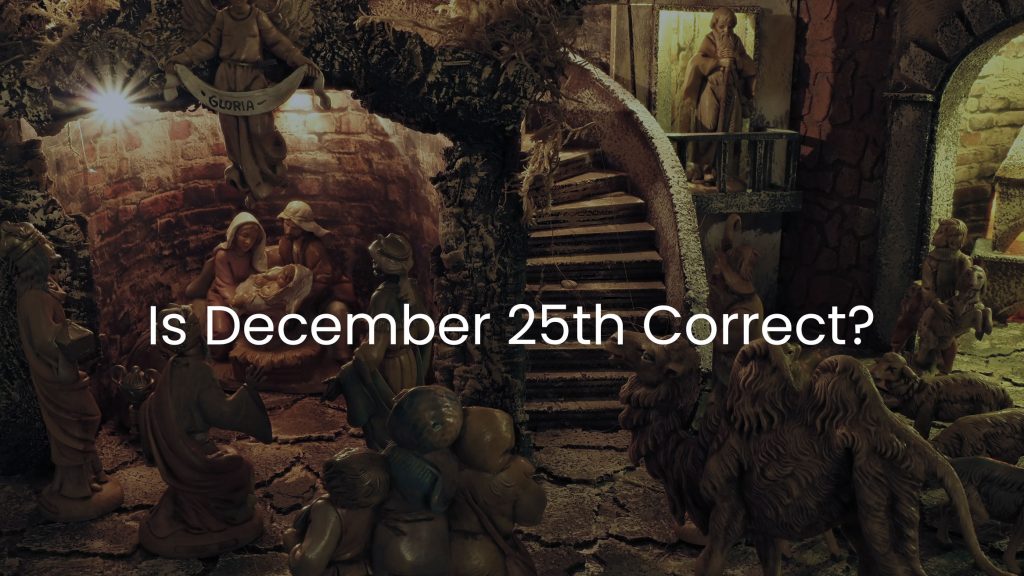
We celebrate Christmas on December 25th. Is this the correct day? Some argue that early Christians mimicked the Roman festival of Saturnalia to provide Christians with an alternative to this pagan holiday. Others say it was just a made-up date.
What are the facts?
First, Jesus was born of a virgin (and all God’s people shout, “Amen!”). Second, Saturnalia was a weeklong festival celebrated between December 17 and 23 and not a single day. Third, well, let me develop this third point below …
- (Please, follow closely) … Elizabeth (probably a cousin to Mary) became pregnant about mid-September (scholars know this because of the time of her husband’s priestly duties described in Luke 1:23-24); Mary became pregnant six months later (Luke 1:26), approximately in late March of the year after Elizabeth became pregnant. Add nine months, and we arrive in late December!
- Early church historians claimed December 25th as the date of Jesus’ birth. Irenaeus wrote in the second century that Jesus was born on the 25th; a commentary on the Book of Daniel written by Hippolytus claimed the 25th; and Gregory of Nazianzus preached a sermon on December 25, 380 A.D. in honor of Christmas Day.
- For history crazies like me, please go ahead and read Pastor Gregory of Nazianzus’s sermon for yourself, as it’s the first complete Christmas sermon known to Christian scholars. Then compare this sermon to your pastor’s on Christmas Eve, saying to him afterwards, “I’ve read the first complete Christmas sermon in history, and in comparison, yours was much better (lol).” Whether true or not, your comment will be a blessing!
- There is no suggestion among the early Christian writers that December 25th was invented to supplant a pagan holiday.
- The “supplanting” theory became popular in the 19th century among doubters who sought to compare Christianity to the mythological religions of Rome, attempting to diminish Christianity.
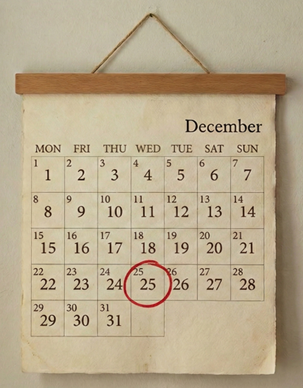
Since we’ve focused on the above facts, we now return to December 25th as the actual birthdate of Christmas. Christianity wasn’t legalized as a religion in the Roman Empire until 313 A.D. Before that time, Christians were social outcasts, not advertising their traditions for fear of persecution, and since December 25th seemed to be the established date before “legalization,” we know that …
Many early Christians believed that December 25th was the correct date for Christmas, and that they kept the date and celebration secret to avoid persecution.
Let’s rejoice this Christmas with absolute certainty that Jesus was born of a virgin and with a little less than absolute certainty, but still confidently, that the correct date is December 25th.