
|
Getting your Trinity Audio player ready...
|
And Jesus said, “A man had two sons. The younger of them said to his father, ‘Father, give me the share of the estate that falls to me.’ So he divided his wealth between them. And not many days later, the younger son gathered everything together and went on a journey into a distant country, and there he squandered his estate in wild living” (Luke 15:11-13, NASB1995).
The title “Parable of the Prodigal Son” is instantly recognized by most as a story in the Bible told by Jesus. Only Luke tells the story in chapter 15:11-32, but the word “prodigal” isn’t found in the text; it comes from a Latin word meaning “wasteful.”
Charles Dickens called the “Parable of the Prodigal Son” the finest short story ever written. Considering the story’s themes of lost and then found, repentance, forgiveness, grace, and homecoming, we can all relate to the son who demanded his inheritance and then “wasted” it through rebellious living.
Now when he had spent everything, a severe famine occurred in that country, and he began to be impoverished. So he went and hired himself out to one of the citizens of that country, and he sent him into his fields to feed swine. And he would have gladly filled his stomach with the pods that the swine were eating, and no one was giving anything to him. But when he came to his senses, he said, ‘How many of my father’s hired men have more than enough bread, but I am dying here with hunger! (Luke 15:14-17).
There could be no lower low than a Jew feeding pigs and eating their pods (the sweet fruit of the carob tree used to feed animals and the completely destitute). How many of us identify with being lost and then found? Fortunately, the prodigal realized his mistake and decided to return home.
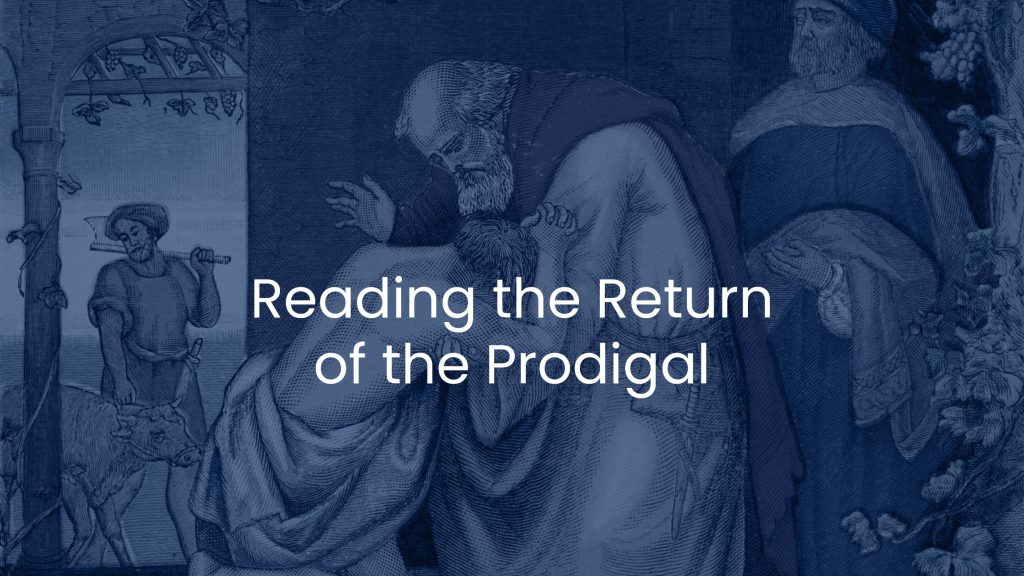
I will get up and go to my father, and will say to him, “Father, I have sinned against heaven, and in your sight; I am no longer worthy to be called your son; make me as one of your hired men.” So he got up and came to his father. But while he was still a long way off, his father saw him and felt compassion for him, and ran and embraced him and kissed him (Luke 15:18-20).
The Father, upon seeing his son walking home, ran to him and embraced him. I’ve italicized “Father” (and capitalized it too) because the parable depicts — no matter what mess we find ourselves in — the reception that we will find when we come home.
Lesson #1 of the Parable of the Prodigal Son — God is always ready to embrace us! As the Father said to the Prodigal (and to us as well)…
The father said to his slaves, ‘Quickly bring out the best robe and put it on him, and put a ring on his hand and sandals on his feet; and bring the fattened calf, kill it, and let us eat and celebrate; for this son of mine was dead and has come to life again; he was lost and has been found.’ And they began to celebrate (Luke 15:22-24).
But the Prodigal’s return had the opposite effect on his older brother…
Now his older son was in the field, and when he came and approached the house, he heard music and dancing. And he summoned one of the servants and began inquiring what these things could be. And he said to him, “Your brother has come, and your father has killed the fattened calf because he has received him back safe and sound.” But he became angry and was not willing to go in (Luke 15:25-28a).
We all have false opinions of our goodness, and while the Prodigal rebelled, the older brother had a strong sense of self-righteousness. I’m not sure which is worse: both sons demean the grace of God, with the prodigal ignoring it and the self-righteous brother believing that he had earned it.
The Father concludes the parable saying, “This brother of yours was dead and has begun to live and was lost and has been found” (v. 32). This statement, though directed at the Prodigal, also challenges those of us who are self-righteous.
Amen! I am no less guilty than a murderer, thief, coveter or an other ungodly sin. I have broken all his commandments, willingly or in my heart. I leave vengeance to You. Help me to share your good news to one needy soul today.