
|
Getting your Trinity Audio player ready...
|
And he gave the apostles, the prophets, the evangelists, the shepherds and teachers, to equip the saints for the work of ministry, for building up the body of Christ (Ephesians 4:11-12, ESV).
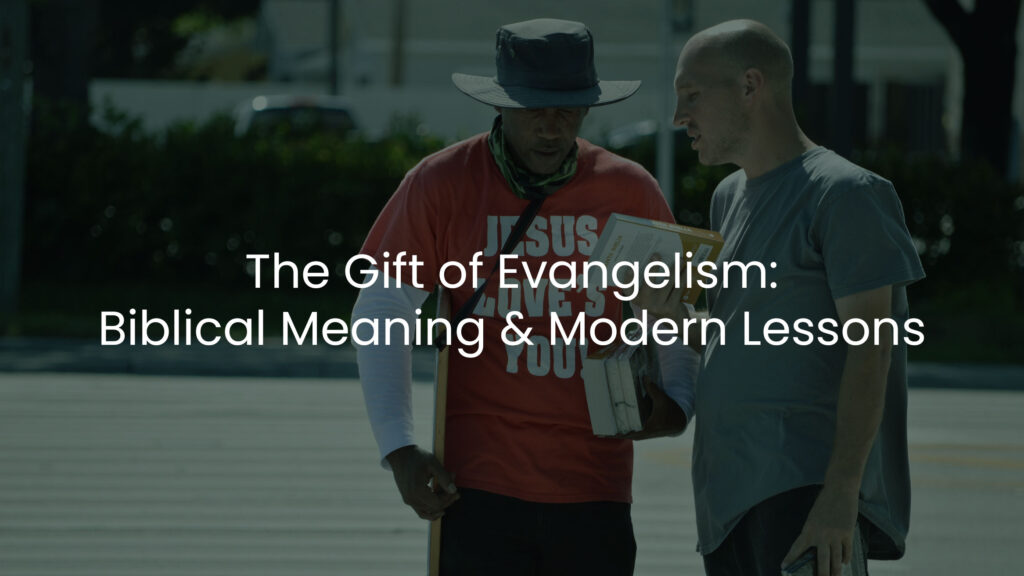
When I first became a believer, I couldn’t keep it to myself. I shared my born-again experience with 16 of my friends from high school, and after hearing my testimony, all 16 became followers of Jesus. I kept sharing my story—gradually mixing in some bona fide preaching—and within a few years, hundreds had come to faith.
Looking back, I believe God gave me the gift of an evangelist.
The Greek word for evangelist, euangelistēs (meaning a “bringer of good news”), appears only three times in the New Testament: as a spiritual gift in Ephesians 4:11, as a title for Philip in Acts 21:8, and in Paul’s charge to Timothy to “do the work of an evangelist” in 2 Timothy 4:5.
Historically, we often think of evangelists as itinerant preachers traveling from town to town proclaiming the gospel. Yet many effective pastors today operate more as evangelists than traditional shepherds and teachers. That outward-facing, gospel-proclaiming DNA goes a long way toward explaining the explosive growth of churches like Saddleback Church under Rick Warren.
Theologians still debate the exact boundaries of an evangelist’s office and function. In Ephesians 4:11–12, Paul writes that Christ gave evangelists alongside other leaders “to equip the saints for the work of ministry, for building up the body of Christ.” John Calvin viewed evangelists as an extraordinary office ranking just below the apostles—pioneers who broke new spiritual ground so local pastors could step in and disciple the flock. Church history is full of these trailblazers, from Hudson Taylor pioneering church-planting movements across inland China to John Wesley sparking the Methodist revival that still endures today. Other theologians rightly point out that the gift frequently overlaps with the local pastor-teacher, blending evangelistic passion with weekly shepherding.
Personally, I believe God also raises up certain evangelists for “such a time as this” moments—when a culture desperately needs a fresh wave of His Spirit. During the early American colonies, Jonathan Edwards (who later served as president of Princeton) preached his famous sermon, “Sinners in the Hands of an Angry God.” As he spoke, conviction swept the room, thousands came to know Jesus, and the Great Awakening ignited across the colonies.
In modern history, the most influential evangelist is undoubtedly Billy Graham, who preached live to more than 215 million people and saw over 3.2 million respond to the invitation to follow Christ. Yet just as Paul urged Timothy to fulfill his ministry faithfully, Graham had to settle a life-altering question about the Bible early in his career.
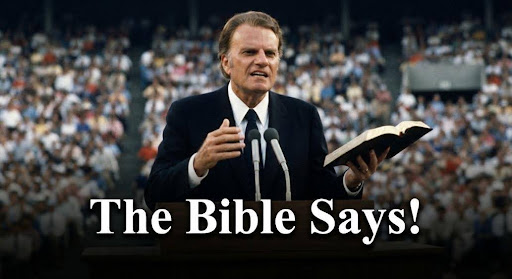
Before Graham was a household name, a close friend steeped in progressive theology challenged him, arguing that his message was outdated and needed to be modernized for a scientific age. Shaken, Graham walked alone into the woods one night at a 1949 retreat in Forest Home, California. Laying his open Bible on a tree stump, he dropped to his knees and prayed: “O God! There are many things in this book I do not understand… Father, I am going to accept this as Thy Word—by faith!”
From that night forward, Graham’s preaching carried a new authority anchored by three simple words: “The Bible says!”
“Doubting Billy” walked out of those woods as “Billy Faithful,” and the world hasn’t been the same since. That moment holds a lesson for every one of us. Regardless of which spiritual gifts we carry, we will all face moments that tempt us to doubt God’s Word and soften our message.
The real question is—will we be found faithful with the gifts we’ve been given?