
|
Getting your Trinity Audio player ready...
|
And great crowds came to him, bringing with them the lame, the blind, the crippled, the mute, and many others, and they put them at his feet, and he healed them, so that the crowd wondered, when they saw the mute speaking, the crippled healthy, the lame walking, and the blind seeing. And they glorified the God of Israel (Matthew 15:30-31, ESV).
Imagine you are a police officer called to the scene of an automobile accident. Two cars — one red and the other blue — have collided after entering an intersection. Fortunately, no one was injured, and those who were riding in the cars, as well as several bystanders who witnessed the accident, are still at the scene.
Your job as a police officer is to discover who caused the red and blue cars to crash.
In Matthew 15 and throughout the Gospels, we read about Jesus performing many miracles. Let’s say that you are a historian, called upon to sift through the historical evidence and determine if there is a high probability, according to existing investigative procedures, that the miracles of Jesus occurred.
This is Reason #6 for the Reliability of the New Testament: Using the same practices used to investigate car accidents today, we can be assured that Jesus performed miracles.
What are these investigative procedures used to investigate a car accident? An interview process has three phases.
- First: What each driver says
- Second: What independent witnesses indicate
- Third: Is there embarrassing testimony?
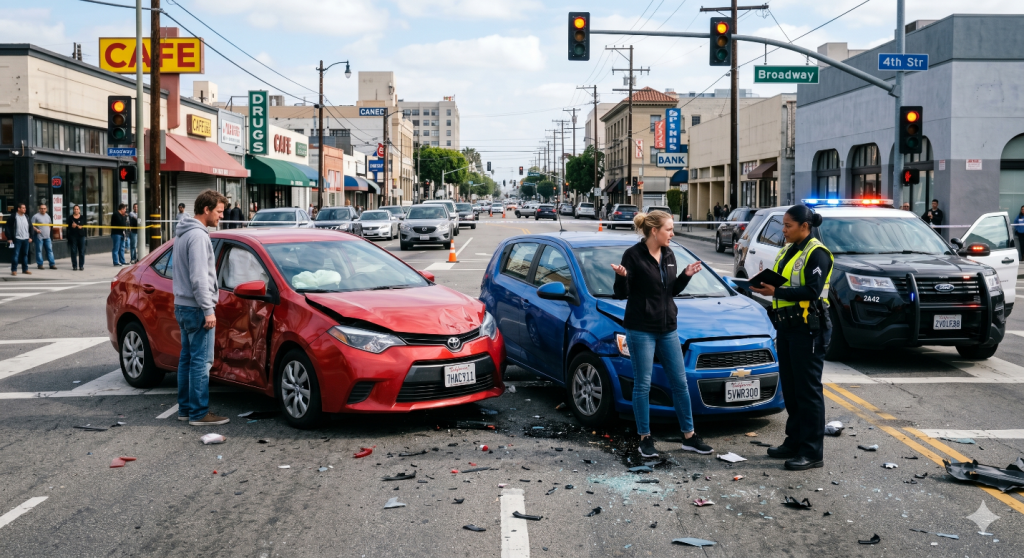
Here is how your investigation proceeds. After speaking with each driver, the blue car driver claims the red car driver ran the red light, and, surprisingly, the red car driver admits to doing so. Then, checking all the boxes for a good investigation, you talk to two witnesses, both of whom say the red car ran the light. And finally, the father of the red car driver tells, “My son looked down to check a text right before he entered the intersection.”
As a police officer, you cite the driver of the red car and positively believe this driver caused the accident. The evidence: the car drivers, the witnesses, and the father all agree.
Now I want you to switch hats from police officer to eminent historian and apply the same principles for discovering the truth about the auto accident to assessing the credibility of the New Testament reports of the miracles of Jesus. Here is what you will find…
- First: Two of the original 12 apostles wrote Gospels listing the miracles
- Second: The number of witnesses, including Luke and Mark (who weren’t apostles but still wrote gospels), and testimony about the miracles of Jesus spread throughout the Roman Empire, with no existing documents from the first century refuting these claims
- Third: Paul, who persecuted the church, and Peter, who denied Him
Using the same pattern of evidence for the car crash, we must admit that Jesus performed miracles. But you might think, “That evidence is all from the Bible.” So, let’s consider that rabbinic traditions found in the Talmud, written after the death of Jesus, do not deny His miracles but charge Jesus with sorcery. And Josephus, a first-century historian, writes that Jesus was “a doer of startling deeds.”
We have testimony from those involved, from other witnesses, and from embarrassing testimony from opponents of Jesus. As one scholar notes, “Despite the difficulty which miracles pose for the modern mind, on historical grounds it is virtually indisputable that Jesus was a healer and exorcist*.”
Wow! I believe.
*In the Bible, an exorcist is defined as an individual who expels evil spirits or demons from a person or place.